Tiny Checks, Big Swings: The Neighbor-Funded Revolution Skipping the Foundation Middleman
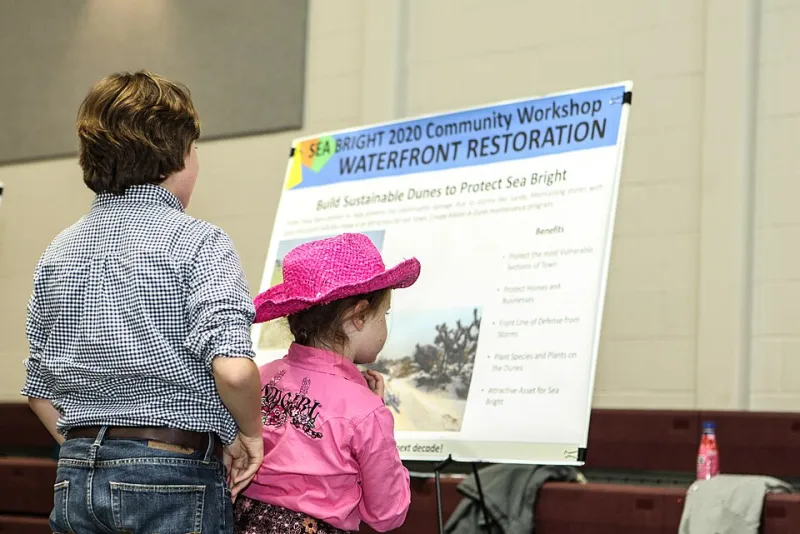
Photo: Department of Homeland Security. Federal Emergency Management Agency. Public Affairs Division. 3/1/2003, Public domain, via Wikimedia Commons
The check was for $4,000. It arrived in eleven days. And by most measures, it did more for Maplewood's east side than the last decade of grant applications combined.
That's the pitch behind micro-grants, anyway — and increasingly, it's not just a pitch. Across the country, small funding pools run by neighbors for neighbors are rewriting assumptions about who gets to decide what a community needs. No 40-page applications. No program officers flying in for site visits. Just a pot of money, a room full of residents, and a vote.
What a Micro-Grant Actually Looks Like
Strip away the jargon and the model is simple. A community pools a modest sum — sometimes through a local community foundation, sometimes through a giving circle, sometimes just through a potluck fundraiser — and offers grants in the $500-to-$5,000 range. Applicants pitch in person, often in under five minutes. The audience votes. Winners walk out with a check.
The speed is the point. Traditional foundation grants routinely take six months to a year from application to disbursement. For a youth program that needs equipment before the school year starts, or a block association trying to fix a broken fence before winter, that timeline is a death sentence dressed up as due diligence.
Micro-grants compress that cycle to weeks. Sometimes days.
Three Towns, Three Experiments
Consider what's happened in three very different places.
In a Rust Belt city of about 60,000, a resident-led fund seeded by a handful of small donations has handed out more than 90 grants averaging $2,500. Recipients include a tool library, a bilingual homework club, and a vacant-lot-turned-produce-stand. None of the projects, organizers admit, would have cleared the bar of a traditional foundation's outcome metrics. All of them are still running.
In a college town in the Mountain West, a participatory budgeting experiment let residents directly allocate $50,000 in city funds through a series of micro-grants. Turnout at the voting events stunned city officials — including many first-time participants who had never attended a public meeting in their lives.
And in a small Southern town still recovering from a factory closure, a church-based giving circle started making $1,000 grants to anyone with "an idea and a plan." One of those grants went to a recently laid-off machinist who used it to buy a trailer and start a mobile lawn-care outfit. He now employs three people.
The Case for Small
Advocates for micro-funding make a few consistent arguments.
First, speed. Community needs don't operate on foundation fiscal calendars.
Second, trust. When neighbors decide how money is spent, the knowledge that guides those decisions is local, granular, and current. A program officer reading a proposal knows what's written on the page. A neighbor voting at a community dinner knows which applicant actually shows up when it snows.
Third, and perhaps most underrated: micro-grants are a leadership pipeline. Small grants let untested organizers prove themselves without requiring them to become grant writers first. Plenty of today's most effective nonprofit leaders got their start with a $1,500 check and a leap of faith.
The Honest Caveats
It would be easy to oversell this. Micro-grants have real limits.
They can't fund a food bank's annual operations. They can't pay a living wage for staff. They can't sustain multi-year programs that need predictable revenue. Critics rightly point out that celebrating micro-funding too loudly risks giving larger funders an excuse to shrink commitments while calling it democratization.
There's also an equity question inside the model itself. Participatory voting events skew toward whoever feels comfortable showing up — often the same confident voices that dominate any public process. Some funds have responded with weighted voting, multilingual pitches, and outreach requirements, but the tension is real.
And small grants, without any follow-up structure, can produce a graveyard of half-finished projects. The best funds pair money with mentorship — a check plus a phone number to call when things get hard.
Not a Replacement. A Complement.
The most honest framing isn't micro-grants versus foundations. It's micro-grants as the early stage of a funding ecosystem — the venture capital of community change, taking risks that institutional philanthropy structurally can't.
Big dollars are good at scaling what works. Small dollars are good at finding out what works in the first place. A healthy community needs both, and right now, most places are dangerously short on the second kind.
The $4,000 check that landed in Maplewood didn't solve the east side's problems. It did something arguably more valuable: it proved to a room full of skeptical residents that they were allowed to try. That permission, it turns out, scales better than any grant.