Keepers of the Block: Meet the Everyday People Saving Your Neighborhood's Story
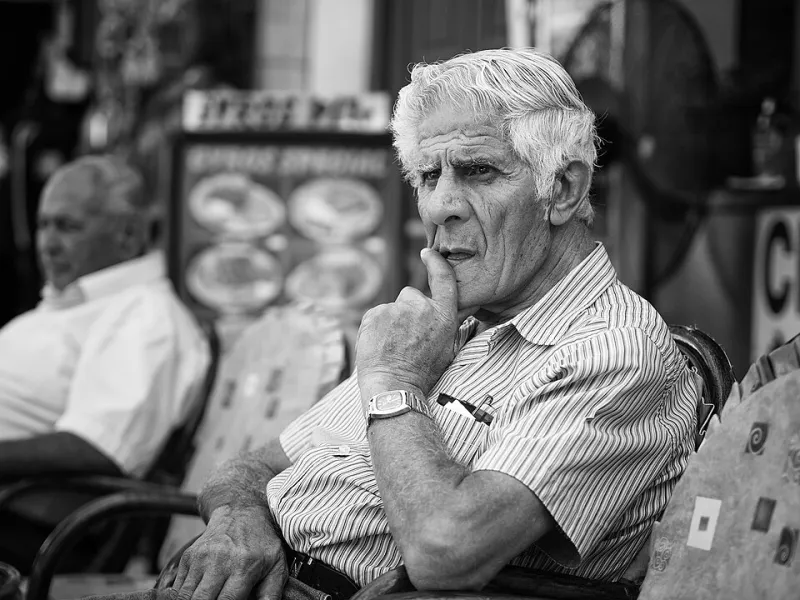
Photo: Martin Hricko, CC BY 3.0, via Wikimedia Commons
Somewhere in a suburb of Cleveland, a retired schoolteacher named Dolores has three filing cabinets stuffed with photocopied church bulletins, hand-drawn maps, and interview transcripts she recorded on a cassette player in the 1990s. Nobody paid her to do it. Nobody asked her to. She just noticed that the old-timers in her neighborhood were dying, and the stories they carried — about the Polish bakeries, the civil rights marches two blocks from the library, the flood of 1969 that nobody talks about anymore — were going with them.
Dolores isn't unusual. She's part of a sprawling, loosely connected movement of people doing the painstaking, unglamorous work of community memory. Historians without credentials. Archivists without institutions. Storytellers without publishers. And in a country that tends to flatten local identity into strip malls and chain restaurants, what they're doing matters more than most of us realize.
What Gets Lost When Nobody's Looking
American communities lose their histories in slow, barely visible ways. A longtime resident passes away. A building gets demolished. A neighborhood changes hands economically and the people who shaped it scatter. Local newspapers, once the unofficial keepers of community record, have closed at an alarming rate — more than 2,500 since 2005, according to researchers at Northwestern University.
What fills that void? Often, nothing. And the absence isn't neutral. When communities lose their histories, they also lose a sense of why they exist, what they've survived, and who they actually are beneath the surface. That loss tends to hit hardest in communities that were already underrepresented in official archives — immigrant neighborhoods, communities of color, working-class towns that never made the history books in the first place.
That's exactly why the grassroots historians stepping into this space aren't just doing a nice hobby project. They're filling a genuine civic gap.
The Toolkit of a Community Archivist
You don't need a degree in history to document where you live. The people doing this work use surprisingly accessible tools.
Oral history is probably the most powerful. Sitting down with an 80-year-old neighbor and recording their memories — with their permission, naturally — can surface details that no written record captures. What did this street smell like in the summer of 1955? Who ran the numbers game out of the barbershop? When did the neighborhood start to change, and what did it feel like from the inside?
Digital scanning has made photo preservation dramatically easier and cheaper. Community groups in cities like Detroit, Baltimore, and Albuquerque have organized "scan-a-thons" where residents bring in old family photos, get free digital copies, and contribute originals or scans to a shared archive. It's a social event as much as an archival one.
Mapping is another tool gaining traction. Platforms like ArcGIS StoryMaps allow non-experts to build layered, interactive neighborhood maps that combine historical photos, recorded interviews, and written narratives. Some community organizations have used these tools to document everything from migration patterns to the locations of demolished Black-owned businesses.
Why This Work Builds More Than Just Records
There's something that happens when a community starts telling its own story. It's hard to quantify, but people who've been part of these projects describe it consistently: a shift in how neighbors relate to each other across generations.
When a teenager sits across from an 85-year-old and hears firsthand about what this block looked like before the highway cut through it, something clicks. History stops being abstract. The older resident feels seen. The younger one feels rooted. That intergenerational connection is genuinely rare in modern American life, and community memory projects create it almost as a side effect.
There's also a resistance dimension to this work that shouldn't be glossed over. In communities facing gentrification, displacement, or erasure, a well-documented history is a form of power. It can support landmark designation applications, strengthen legal cases for community land trusts, and give residents a concrete, evidence-based narrative to bring to city council meetings. "We've been here" is a stronger argument when you can prove it.
Where Organizations Fit In
This is where local nonprofits and community organizations have a real role to play — and many are stepping up. Libraries have long been the most natural institutional home for community archives, and a number of public library systems have launched oral history programs specifically designed to document underrepresented communities. Historical societies, neighborhood associations, and cultural centers are increasingly partnering with grassroots archivists to give their work a more permanent home.
Some organizations are going further. In Chicago, community groups have trained residents to conduct their own oral history interviews using a standardized methodology, creating a distributed network of neighborhood historians who feed into a central digital archive. In rural Appalachia, nonprofits focused on cultural preservation have combined history documentation with economic development, creating paid positions for community members to do archival work full-time.
The challenge, as with so much community work, is sustainability. Volunteer-driven projects are vulnerable to burnout and leadership transitions. Funding for local history preservation is notoriously scarce — it rarely fits neatly into the grant categories that funders prefer. Organizations that want to support this work often have to get creative about how they frame it: as civic engagement, as youth programming, as economic heritage, as mental health and belonging.
How You Can Get Involved
If any of this is landing with you, the entry points are lower than you might think.
Start close to home. Do you have boxes of old family photos that relate to your neighborhood? Reach out to your local library or historical society about contributing digital copies. Many institutions are actively looking for material and will help you with the process.
Look for existing projects. Search for oral history initiatives, neighborhood documentation projects, or community archives in your area. Organizations like the Oral History Association maintain resources and can help you find local networks. If something exists near you, showing up and offering a few hours is often the most valuable thing you can do.
If nothing exists, consider starting something small. A neighborhood Facebook group dedicated to old photos. A single recorded conversation with an elder on your street. A Google Doc where longtime residents can add their memories of a building that's about to be torn down. None of this requires a grant or a 501(c)(3). It just requires someone deciding that the story is worth keeping.
The Compass Points Backward, Too
At Community Compass, we spend a lot of time thinking about where communities are headed. But direction only makes sense when you know where you've been. The people quietly cataloging your town's forgotten corners aren't nostalgists — they're navigators. They understand that a community without memory is a community without bearings.
Dolores in Cleveland is still at it, by the way. She's teaching her granddaughter to use a scanner. The filing cabinets are getting a digital backup. The stories aren't going anywhere — not on her watch.