The Glue Nobody Talks About: Uncovering the Secret Networks Holding Your Neighborhood Together
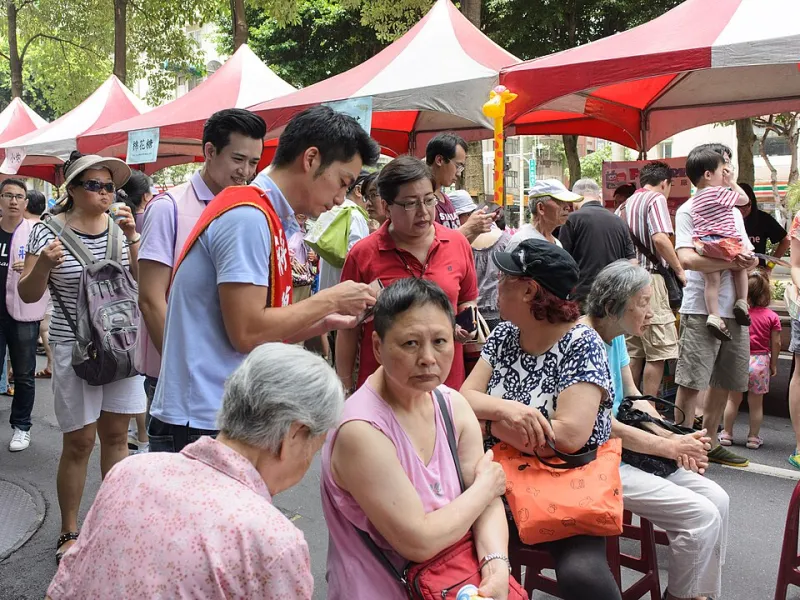
Photo: 玄史生, CC0, via Wikimedia Commons
What the Map Leaves Out
Pull up any city's community resource page and you'll find the usual suspects: food pantries, housing assistance hotlines, after-school programs with .org websites and office hours. Clean, organized, easy to link to. And genuinely useful, no doubt about it.
But ask a longtime resident of almost any American neighborhood who actually kept things together during the last crisis — a flood, a factory closure, a spike in violence — and the answer almost never starts with a government program. It starts with a person. Usually someone who doesn't have a title, a salary, or a business card.
This is the invisible infrastructure. And in city after city, it's doing heavy lifting that never shows up in any budget report.
The Elder Who Knows Everyone
In neighborhoods across the country, there's almost always someone who functions as an unofficial switchboard. They've lived on the same street for 40 years. They know whose cousin is a licensed electrician, which family just lost a job, which teenager is struggling in school and might respond to the right kind of attention. They're not a social worker. They're not on any nonprofit's payroll. They're just present, and they've accumulated a kind of relational knowledge that no database can replicate.
Community researchers sometimes call these folks "natural helpers" — people who absorb and redistribute social capital almost instinctively. Sociologists have studied them. Occasionally, a smart community organization will figure out how to partner with them. But more often than not, they operate entirely off the grid, doing their thing quietly until they move away or pass on, taking everything they know with them.
That's a loss that rarely gets counted anywhere.
Mutual Aid: The Network That Predates the Nonprofit
Long before the term "mutual aid" became a buzzword during the COVID-19 pandemic, informal support networks were doing exactly what the phrase describes — neighbors helping neighbors, no application required. Immigrant communities in particular have relied on these structures for generations. Rotating credit associations, informal childcare swaps, shared tools and vehicles, food-sharing networks operating entirely through group texts: these systems move fast, respond to real-time need, and carry almost zero administrative overhead.
And yet, because they're unregistered and unmeasured, they're essentially invisible to the agencies and funders trying to understand what a community actually needs. There's a quiet irony in that. The most efficient support systems are often the ones nobody's tracking.
This isn't an argument against formal organizations — those matter enormously. It's more of a question worth sitting with: What are we missing because we only measure what's official?
Neighborhood Watch, Reimagined
The phrase "neighborhood watch" tends to conjure a specific and not entirely comfortable image for a lot of Americans. But strip away the baggage and you'll find something genuinely valuable underneath: a network of people who pay attention to their immediate surroundings and share information with each other. In many communities, that function has quietly evolved into something far more sophisticated.
Block-level text chains that alert neighbors to everything from a suspicious car to a loose dog to a family that just got evicted and needs help moving furniture. Parents who coordinate school pickups during bad weather. Residents who've developed informal relationships with local business owners to keep an eye on elderly neighbors who shop there regularly. None of this is formal. None of it is funded. All of it is real, and all of it fills gaps that no city agency could fill affordably even if it wanted to.
Why This Stuff Disappears — And Why That Should Scare Us
Here's the uncomfortable part. This kind of infrastructure is incredibly fragile.
Gentrification reshuffles the people who carry relational knowledge out of the neighborhoods that need it most. Aging populations thin out the ranks of natural helpers without replacement pipelines. Economic pressure forces longtime residents to work longer hours, leaving less time for the informal civic engagement that holds things together. And because none of it is documented, there's no institutional memory to fall back on when the people who made it work are gone.
We've seen this pattern play out in neighborhoods from Detroit to Los Angeles to rural Appalachia. A community that looked resilient on paper becomes suddenly fragile the moment a few key unofficial connectors leave the picture. The programs are still there. The people who knew how to use them are not.
Starting to Draw the Real Map
So what do you actually do with this problem? A few communities are starting to experiment with what some organizers call "asset mapping" — a process of systematically documenting the informal resources, relationships, and knowledge systems that exist in a neighborhood, not just the official ones.
It sounds simple, but it requires a different kind of listening. You can't find this stuff in a database. You have to talk to people. Long-term residents. Block captains. The woman who's been running an informal daycare out of her living room for 20 years. The retired teacher who tutors kids for free on Saturday mornings. The guy at the barbershop who somehow knows everything.
Some organizations are going further, creating community "knowledge archives" — oral history projects, neighborhood newsletters, even simple shared documents — that attempt to capture and preserve the informal wisdom before it evaporates. It's unglamorous work. It doesn't attract big grants. But the communities doing it are building something that official programs genuinely can't replicate: a living record of how things actually work.
The Compass Points Inward First
There's a reason we named this site what we did. Finding your direction in a community context isn't always about looking outward to the next program or the next initiative. Sometimes the most important thing is turning the compass around and taking a serious look at what's already there — the relationships, the knowledge, the people who've been quietly keeping things functional without anyone noticing.
The invisible infrastructure isn't a gap to be filled. It's an asset to be recognized, supported, and — before it's too late — written down.
Your neighborhood's best resource probably doesn't have a website. It might not even have a name. But it's there. And it's worth finding before it disappears.