Stop Asking for 'All Hands': The Case for Narrow, Honest Volunteer Jobs
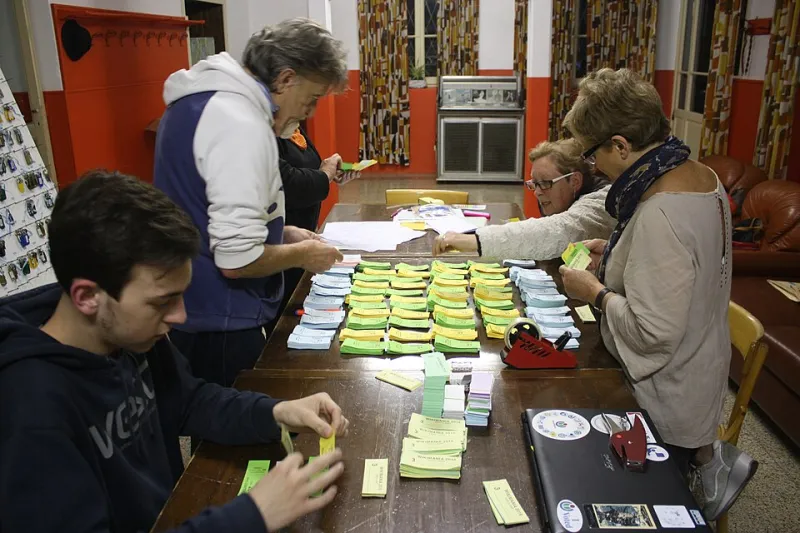
Photo: Dario Crespi, CC BY-SA 4.0, via Wikimedia Commons
Every community group has posted some version of the same message: We need more help. Sometimes it is a Facebook post. Sometimes it is a sign-up sheet at a church supper. Sometimes it is a sentence at the end of a meeting that lands like a sigh. And every time, a bunch of people read it, feel a flicker of guilt or goodwill, and keep scrolling.
That is not because Americans have stopped caring. It is because the ask is too vague. 'We need more help' is not a job description. It is a mood. And moods are hard to schedule.
The problem with the open-ended ask
A broad volunteer appeal pushes the hardest work onto the person you are trying to recruit. They have to guess what you mean, wonder how long it will take, imagine whether they are qualified, and decide whether the commitment will swallow their Saturdays. Most people will not do that math for a group they barely know.
The result is a familiar cycle. The same eight people show up. The organizer gets tired. The group sends out another all-hands plea. A few new names appear, get overwhelmed, and disappear. Nobody did anything wrong, exactly. The ask was just too fuzzy to say yes to.
What a bounded ask looks like
A bounded ask answers three questions before anyone has to ask them: what will I do, how long will it take, and what will change because I showed up?
One food pantry in Ohio stopped posting 'volunteers needed' and started posting a specific Saturday shift: sort produce for two hours, lift up to 20 pounds, wear closed-toe shoes, and leave knowing 60 families have fresh food for the week. The group did not need a marketing campaign. It needed a clearer sentence.
A trail group in Colorado made a similar shift. Instead of 'help maintain trails,' it advertised a 90-minute tool safety session followed by drain clearing on one half-mile stretch. People knew the time, the task, and the finish line. That is a lot easier to fit into a life.
The three ingredients: task, time, impact
Most effective volunteer postings sound almost boring. That is the point. They include a named task, a time box, and a visible result. They also name a human contact who will be there when the volunteer arrives.
That last part matters more than groups realize. A new volunteer is not just afraid of doing too much. They are afraid of standing around awkwardly while everyone else knows where the gloves are kept. A specific role with a specific greeter lowers that social risk.
Why narrow asks help retention, not just recruitment
It is tempting to think specific asks only help you get first-timers in the door. In practice, they also keep people longer. Volunteers stay when expectations match reality. If someone signs up to pack boxes for two hours and actually packs boxes for two hours, they trust you. If they sign up to 'help out' and end up running the whole event, they may not come back.
Bounded roles also make it easier for people to return. A person who cannot commit every week might happily take one shift a month. A teenager might do a single service project. A retired neighbor might water plants on Tuesdays. Those small yeses add up, but only if the group makes them possible.
Audit your own volunteer postings
Here is a quick checklist for any community group, neighborhood association, or small nonprofit. Pull up your last three volunteer asks and run them through this list.
- Does the posting name the actual task in plain language?
- Does it state a realistic time commitment, including setup and cleanup?
- Does it say where to go and who to ask for?
- Does it mention physical requirements, age limits, or training needs?
- Does it explain what the volunteer will accomplish or who benefits?
- Can someone do it once, without signing up for forever?
- Is there a role for people who cannot lift, drive, or stand for long periods?
- Is the contact person easy to reach and quick to reply?
- Does the posting avoid guilt language?
- Is there a simple way to say yes today?
If you cannot answer most of those questions, the posting is probably asking readers to do your design work.
Try one rewrite this week
You do not need a new volunteer management system. You need one better sentence. Take your vaguest ask and rewrite it around a single task, a short block of time, and a clear outcome. Then send it to five people who have never volunteered with you and ask what they think it means.
If they can repeat the job back to you, you are on the right track. If they shrug, keep editing. The goal is not to make volunteering sound impressive. The goal is to make it easy to understand, easy to try, and easy to trust. That is how groups stop chasing the same twelve faces and start building a wider, steadier circle of help.